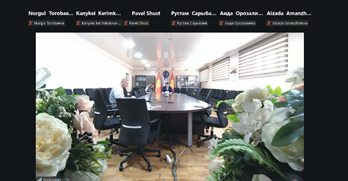
 On 14 July 2026, the Union of Banks of Kyrgyzstan, within the framework of the Third Meeting of the National Remittance Stakeholder Network (NRSN), convened a meeting of banks, payment organizations, and international development partners dedicated to Kyrgyzstan’s upcoming EAG/FATF Mutual Evaluation on Anti-Money Laundering and Countering the Financing of Terrorism (AML/CFT). The event was organized under the IFAD REMIT PRIME Central Asia project.
More than 40 participants discussed Kyrgyzstan’s preparations for the forthcoming EAG/FATF Mutual Evaluation, with particular emphasis on the banking sector, compliance, and coordination among regulators, government authorities, and international partners. Presentations were delivered by Mr. Bakytbek Alisherov, Deputy Chairman of the Financial Intelligence Service of the Kyrgyz Republic; Ms. Kanykei Kerimkulova, Programme Officer at the OSCE Programme Office in Bishkek; and Mr. Dilshod Fatullo, representative of the Financial Services Volunteer Corps (FSVC).
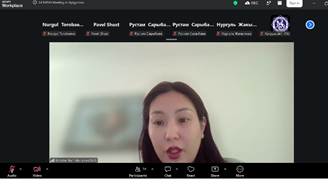 In her presentation, the OSCE representative emphasized the organization’s role as a platform for knowledge sharing and coordination of technical assistance in the field of AML/CFT, ensuring that donor support is complementary and aligned with the priorities of the national strategy. Since December, the OSCE and the Eurasian Group (EAG) have been conducting a series of workshops for government agencies aimed at strengthening participants’ understanding of the assessors’ expectations under the third round of mutual evaluations and supporting the structured presentation of information on the national AML/CFT system. These workshops translate FATF and EAG standards into practical actions, ranging from the implementation of risk-based supervision to the preparation of technical assistance plans for the implementation of future recommendations.
The Deputy Chairman of the Financial Intelligence Service outlined the approach to preparing the banking sector for the on-site assessment mission, highlighting the importance of risk-based supervision, the effectiveness of internal controls, and the quality of suspicious transaction reporting. Banks’ understanding of their ML/TF risks and the robustness of their internal control systems were identified as key factors that will influence the overall assessment of Kyrgyzstan’s AML/CFT framework.
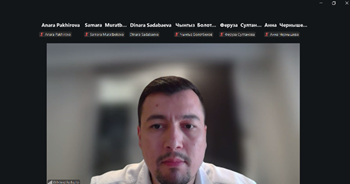 The FSVC representative emphasized that financial institutions must have a comprehensive understanding of their risks in order to build resilient business models and improve the overall quality of the financial sector. Mutual evaluation reports provide a detailed assessment of the strengths and weaknesses of national AML/CFT systems, and banks should use the findings of previous evaluations to review and strengthen their institutional risk assessments and compliance processes. Transparency in operations and sound corporate governance were highlighted as fundamental elements of a sustainable financial sector and as the basis for maintaining the confidence of customers, regulators, and international partners.
The key conclusion of the meeting was that successful preparation for the Mutual Evaluation requires not only the readiness of regulatory authorities but also the active engagement of banks, regulators, government institutions, and continuous dialogue among all stakeholders within the national AML/CFT system.
The IFAD REMIT PRIME Central Asia programme, supported by the International Fund for Agricultural Development (IFAD), aims to strengthen the efficiency and resilience of remittance ecosystems, support rural communities and migrant families, and promote the development of modern digital financial services across Central Asia.